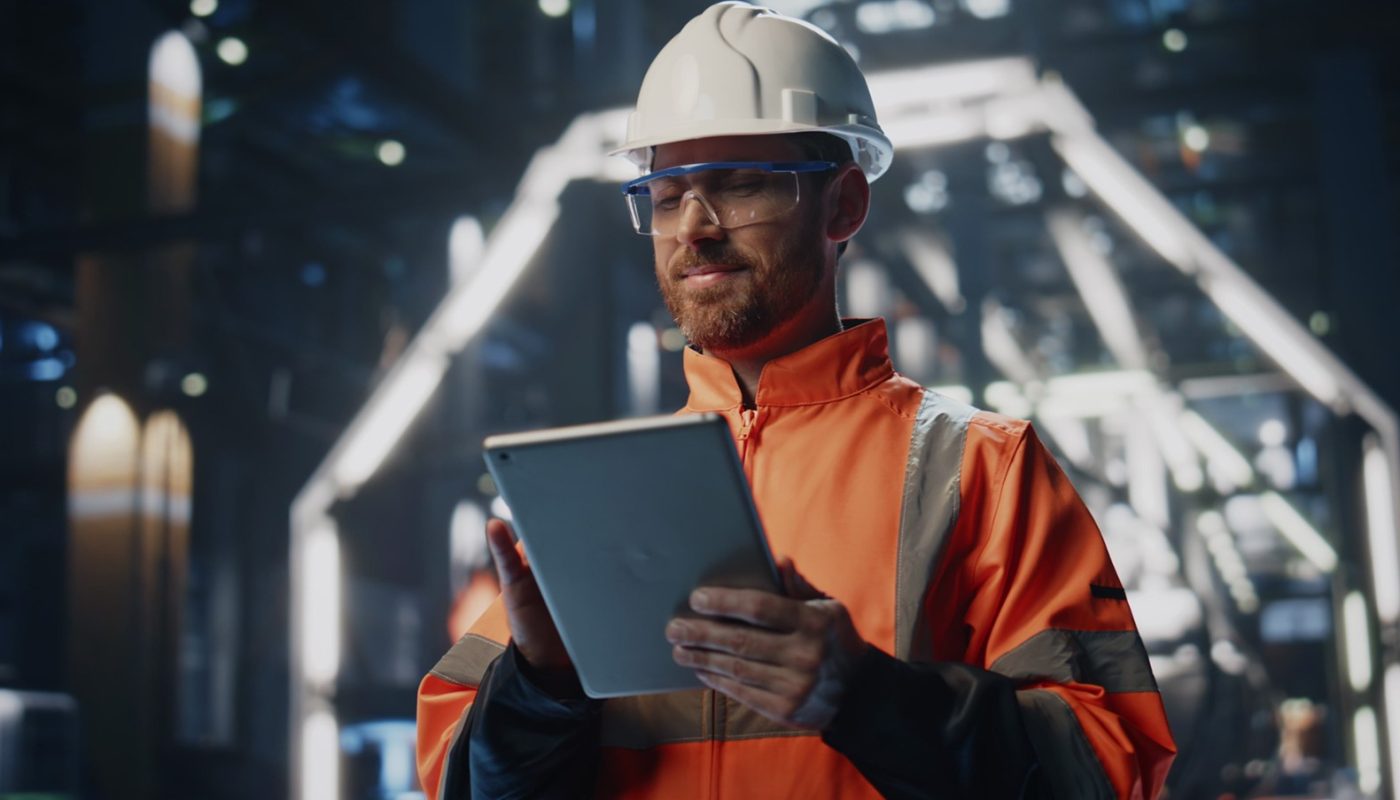
When frontline workers are connected to the safety system in real time, hazards, training, and records stop waiting for someone to get back to a desk.
Most safety information still travels slowly. A hazard is spotted in the field, written on paper, and entered into a system hours or days later. A worker has a question about a procedure and waits until the next break to ask. A form is filled out by hand, then re-keyed at the office. The work happens in real time, but the information about it often does not.
A connected worker is a frontline employee equipped with digital tools, usually a mobile device, that link them directly to the safety and training system, so information flows both ways between the field and the safety team as work happens. The idea is gaining ground because the technology behind it has matured. NIOSH, in its work on advanced sensor technologies and the future of work, describes how real-time data from the field is reshaping the way organizations measure exposure and manage risk. The frontline is becoming a live source of information rather than a place where information is collected and reported later.
The cost of a disconnected frontline
When workers are not connected to the safety system, the gaps are not dramatic. They are the small delays and breaks in the chain that add up over time.
A hazard noticed on a Monday morning may not reach the safety team until a paper form makes its way back to the office, and by then others may have encountered it. Training a worker needs is available, but only at a computer they reach at the end of the day. An incident is documented on a clipboard, and the details blur by the time they are typed up. This does not reflect a lack of care. It is the friction of information that has to travel through people and paper before it becomes useful.
For a safety team, that friction shows up as a delayed picture. Decisions get made on information that is hours or days old, and the chance to act early is often gone before the data arrives. Teams already working hard to stay on top of field conditions deserve a faster path between what happens on site and what they can see.
Why real-time matters now
The case for connecting workers is straightforward. Safety decisions are better when they are based on what is happening now. NIOSH’s Direct Reading and Sensor Technologies work points to how real-time monitoring can detect hazardous conditions and trigger alerts, turning data into action while there is still time to respond. The agency has also studied wearable warning systems that alert construction workers to nearby vehicles and equipment, a direct example of real-time information helping prevent struck-by incidents.
The same logic applies to the broader flow of safety information, not only to sensor readings. When a hazard report reaches the right person the moment it is filed, a control can be put in place before the next shift. When a worker can pull up a procedure or a safety data sheet on the spot, the job is more likely to be done correctly the first time. When training and certifications are visible in the field, a supervisor can confirm a worker is qualified before assigning a task rather than after. Speed, in this context, is not about rushing. It is about removing the delay between knowing and acting.
What a connected worker approach looks like
A connected worker approach gives frontline employees the tools to take part in the safety system directly, using the device most of them already carry.
Workers report hazards, near misses, and incidents from where they happen, with photos and detail captured at the source. They complete digital forms and inspections in the field, and those records flow into the system without re-entry. They access training, procedures, and documentation on demand instead of waiting for a desk. They receive alerts and assignments quickly, so important information reaches them in time to act. And the safety team sees this activity as it arrives, with a live view across sites rather than a backlog of paperwork to process.
The result is a two-way connection. Information moves from the field to the safety team without delay, and from the safety team to the field without friction. For lone or remote workers, that same connection can include check-ins and a fast way to call for help, so someone working alone is not out of contact with the team. The frontline stops being the slowest part of the safety system and becomes one of its most current sources of information.
Where BIS fits
This is what BIS Safety Software was built to enable. BIS connects frontline workers to the same platform their safety team uses, through the mobile devices they already carry, so the field and the office work from one current source of information.
Workers and supervisors can report hazards and incidents, complete digital forms and inspections, and reach training and documentation from the field. Submissions route automatically to the right people, corrective actions are assigned with owners and due dates and tracked to completion, and notifications keep workers informed about assignments, expirations, and updates. Because the connected worker tools sit on the same platform as training records, competency, hazard management, and incident management, a report from the field can trigger the right follow-up right away, whether that is a corrective action, a training assignment, or a competency check.
For safety teams ready to close the distance between the field and the office, see how the BIS Connected Worker approach puts real-time reporting, training, and records in the hands of frontline workers on one connected platform.
Frequently Asked Questions
What is a connected worker?
A connected worker is a frontline employee equipped with digital tools, most often a mobile device, that link them directly to their organization’s safety and training systems. This lets information move both ways in real time, so workers can report, access, and receive safety information from where the work happens rather than from a desk.
What is connected worker technology used for in safety?
In a safety context, connected worker technology is used to report hazards, near misses, and incidents from the field, complete digital forms and inspections, access training and procedures on demand, and receive real-time alerts and assignments. It gives safety teams a current view of field activity instead of a backlog of paperwork to process later.
How does a connected worker approach improve safety outcomes?
It shortens the time between when something is observed in the field and when the safety team can act on it. A hazard reported in real time can be controlled sooner, a worker can confirm a procedure on the spot, and qualifications can be checked before a task begins. Faster and more accurate information supports earlier intervention.
Do connected worker tools require wearables or special hardware?
Not necessarily. While the connected worker field includes wearables and sensors, much of the value comes from tools that run on the mobile devices workers already carry. Mobile reporting, digital forms, and on-demand access to training and documentation deliver a real-time connection without specialized equipment, though wearables and sensors can add capability where they fit the work.
How does BIS support a connected worker approach?
BIS connects frontline workers to the same platform their safety team uses through mobile devices, supporting field reporting, digital forms and inspections, on-demand training access, and real-time notifications. Because these tools share a platform with training records, competency, hazards, and incident management, information from the field can drive the right follow-up without delay.