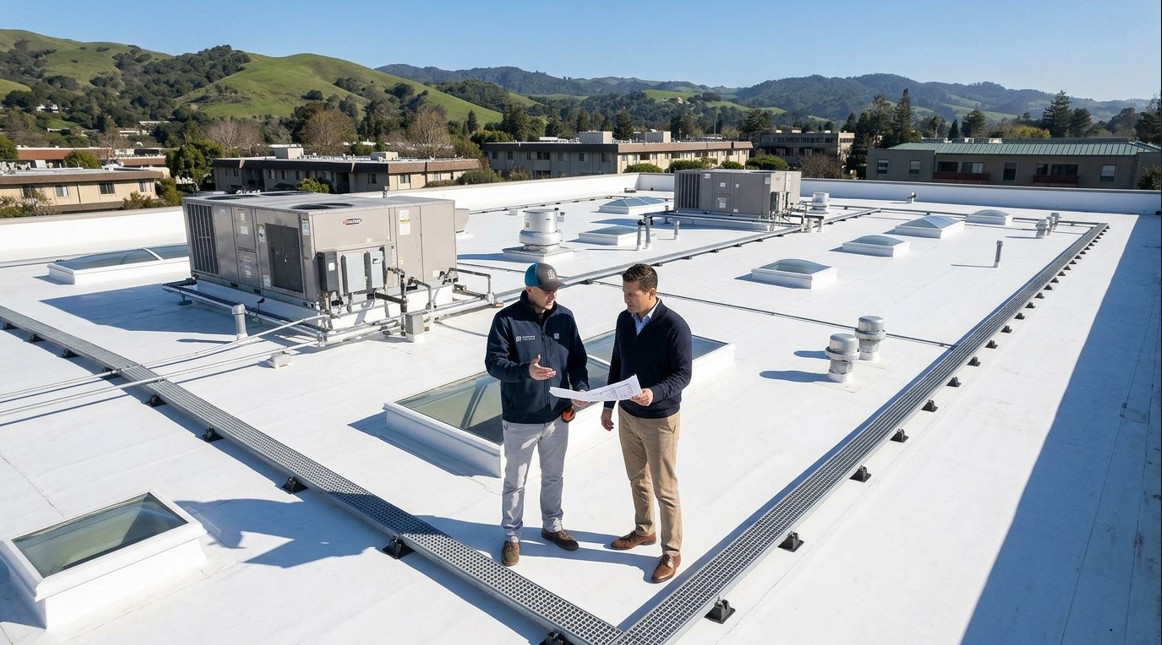
Surprisingly, many commercial roofing problems begin in places building owners rarely see. A roof can appear perfectly functional from ground level while hidden weaknesses slowly develop around drains, seams, penetrations, and equipment mounts. Understanding where trouble commonly starts helps property owners recognize concerns earlier and protect their buildings from larger repair costs later.
Rooftop Equipment Curbs Often Become Early Leak Entry Points
Above many commercial buildings sit HVAC units, exhaust systems, and mechanical equipment supported by raised curbs that penetrate the roofing assembly. Although these structures are necessary, every penetration creates another opportunity for water intrusion if flashing details begin to deteriorate. Small gaps around equipment curbs can allow moisture to bypass the outer roofing surface and reach insulation or decking materials below.
Unlike open roof areas, equipment curbs experience constant vibration from mechanical systems. Continuous movement gradually stresses sealants, flashing components, and membrane attachments. Experienced roof contractors often pay close attention to these locations during inspections because minor failures around curbs frequently become some of the earliest sources of commercial roof leaks.
Ponding Water Gradually Weakens Commercial Roof Assemblies
Following heavy rainfall, low-slope commercial roofs sometimes retain standing water for extended periods. While a few shallow puddles may seem harmless, repeated ponding places additional stress on roofing materials that were designed to shed water efficiently.
Over time, trapped water accelerates membrane aging, encourages biological growth, and increases structural loading. Professional roof contractors in Cullman AL frequently investigate drainage patterns because correcting low areas early can significantly extend the lifespan of a commercial roofing system.
Flashing Separation Around Penetrations Invites Moisture Intrusion
Every pipe, vent, conduit, and rooftop accessory requires flashing that creates a watertight transition between the roof surface and the penetration itself. Flashing components expand, contract, and weather differently than surrounding roofing materials, making them vulnerable to gradual separation.
Meanwhile, moisture often enters long before visible interior signs appear. Water may travel considerable distances beneath the roof surface before becoming noticeable inside the building. Skilled commercial roofing contractor teams understand that penetration flashings deserve routine inspection because even small separations can create widespread hidden damage.
Clogged Roof Drains Place Extra Stress on Roofing Membranes
Leaves, debris, sediment, and discarded rooftop materials frequently accumulate around drain openings. Restricted drainage slows water removal and allows larger volumes of standing water to remain on the roof surface after storms.
Consequently, roofing membranes experience longer exposure to moisture and increased loading. Reliable roof companies in Cullman AL often recommend regular drain maintenance because clear drainage systems help preserve roofing performance while reducing the likelihood of emergency repairs following major rainfall events.
Foot Traffic Slowly Wears Down High Use Roof Pathways
Commercial roofs often serve as access routes for maintenance personnel, HVAC technicians, electricians, and other service providers. Repeated foot traffic concentrates wear in specific areas that experience far more activity than the rest of the roof.
Beneath those pathways, membrane surfaces may gradually thin, protective coatings may wear away, and seams can become stressed from constant use. Reputable commercial roof contractors frequently identify traffic-related wear patterns during inspections and may recommend designated walkway systems to help reduce ongoing damage.
Loose Edge Metal Leaves Roof Systems Vulnerable to Wind Lift
Perimeter edge metal performs a larger role than many building owners realize. Properly secured edge assemblies help anchor roofing materials and resist wind forces that attempt to lift membrane systems during storms.
Unfortunately, loose fasteners, aging attachments, or improper installation can compromise those protective edges. Strong wind events often exploit weakened perimeter components first, which is why experienced commercial roofing contractor in Cullman AL professionals routinely inspect edge metal conditions as part of preventative maintenance programs.
Expansion and Contraction Fatigue Weakens Roof Seams Over Time
Commercial roofing materials constantly respond to changing temperatures. Daily heating and cooling cycles cause membranes, fasteners, and structural components to expand and contract throughout the year.
Eventually, that repetitive movement creates stress along seams where separate roofing sections connect. Gradual fatigue may weaken welded joints, adhesives, or attachment points. Knowledgeable roof contractors monitor seam integrity carefully because seam-related failures often begin as small defects before developing into significant moisture entry points.
Unsealed Mechanical Installations Can Disrupt Roof System Integrity
Additional equipment installations often occur years after the original roofing project is completed. Communication lines, security systems, solar equipment, and upgraded mechanical units frequently require new penetrations through existing roof assemblies. Without proper coordination, those modifications can compromise the original waterproofing design. Trusted roof companies near me regularly encounter leaks caused by third-party installations that lacked appropriate flashing or sealing procedures. Yellow Hammer helps property owners identify roofing concerns, evaluate vulnerable roof components, and maintain commercial roofing systems through professional inspections and repair strategies designed to support long-term building protection.


