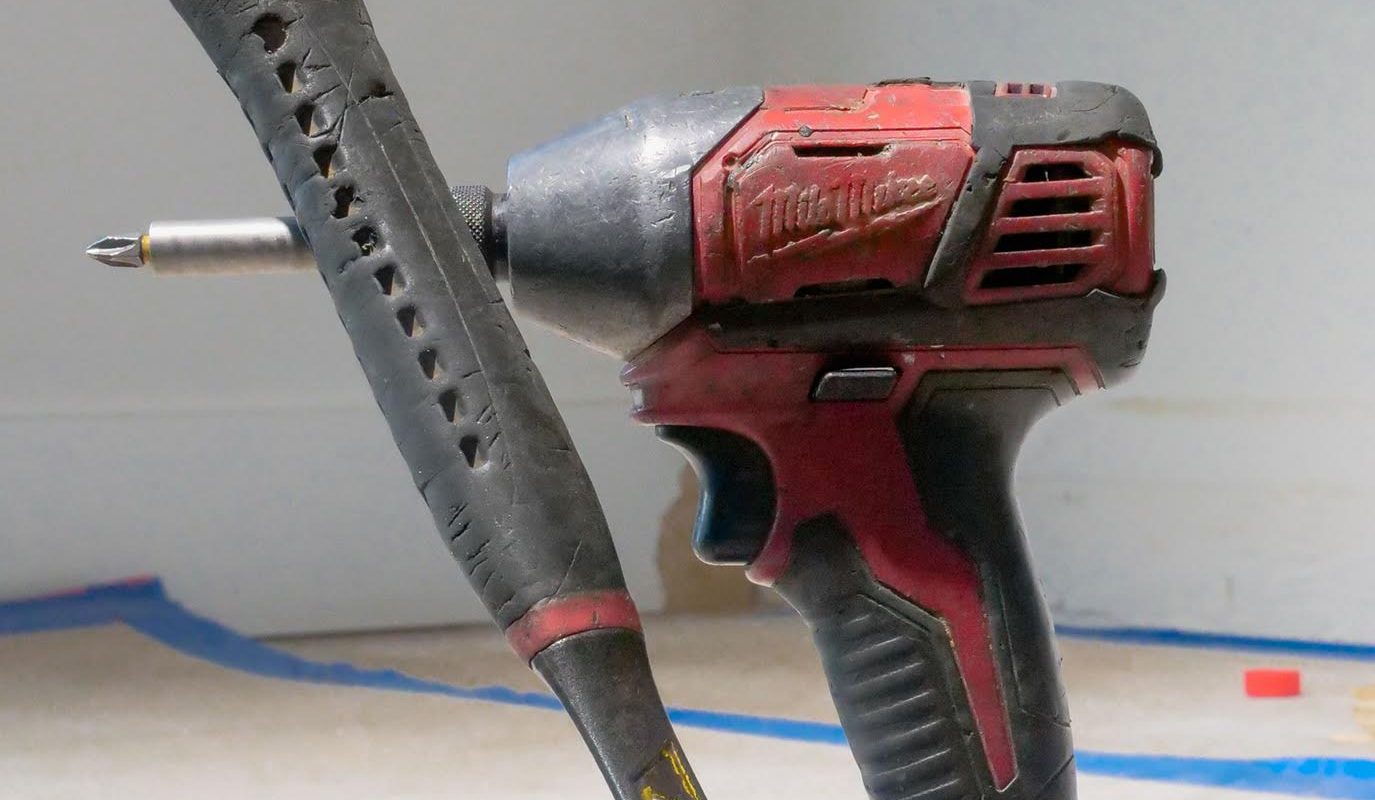
Few power tool brands are as instantly recognisable on a job site as Milwaukee, with its signature red-and-black colourway and a reputation built on being, in the brand’s own words, “heavy duty.” But Milwaukee’s story is more than a marketing tagline — it’s a century-long case study in how a single lightweight drill, built to solve one very specific problem for Henry Ford’s assembly lines, grew into one of the largest professional cordless tool ecosystems in the world. This article traces that history, surveys the breadth of what Milwaukee makes today, highlights its most iconic products, and explains why so many trades gravitate toward the brand over its competitors.
Table of Contents
Origins: A Drill Built for Henry Ford
Milwaukee’s story begins not with a company, but with a problem. At the end of the First World War, Henry Ford was looking for a fabricator willing to build a lighter, more portable version of the bulky quarter-inch capacity power drills then used on Ford’s assembly lines — tools that were heavy, cumbersome, and slow to operate. A young Wisconsin tool-and-die manufacturer named A.H. Petersen took up the challenge and developed what became known as the Hole-Shooter: a five-pound, one-handed, ¼-inch capacity electric drill powered by a series-type Westinghouse motor. It was the industry’s first drill light enough to be operated with one hand while still delivering the power needed for genuine industrial work, and it transformed productivity on assembly lines almost overnight.
In 1922, Petersen partnered with businessman Albert F. Siebert to formalise the venture as the A.H. Petersen Company. Disaster struck the following year when a fire destroyed their manufacturing facility, forcing the business to close. Siebert, however, saw enough promise in the Hole-Shooter to purchase the company’s remaining assets at auction in 1924 and relaunch the business under a new name: the Milwaukee Electric Tool Corporation.
In its earliest years, the company actually built much of its reputation not on invention but on service and refinement — repairing existing tools, listening closely to tradespeople’s feedback, and using that insight to make the Hole-Shooter progressively stronger and more durable for demanding automotive and metalworking applications. That customer-feedback-driven approach to product development has remained a defining thread throughout the company’s history.
Wartime Growth and Early Landmark Tools
The Second World War proved to be a major inflection point. Milwaukee’s Hole-Shooters became essential equipment in the manufacture of military aircraft, and the tools’ reliability under demanding conditions caught the attention of the United States Navy, which began placing significant orders — an early vote of confidence that helped establish Milwaukee’s reputation for genuine heavy-duty performance rather than just marketing claims.
The postwar decades produced a string of genuinely category-defining products:
- 1949 — Milwaukee introduced spring clutch technology into its sanders and grinders, eliminating backlash and producing a noticeably smoother-running tool, a refinement soon extended to circular saws as well. The same year saw the launch of the first ½-inch right-angle drill.
- 1951 — The Sawzall, arguably Milwaukee’s most famous product, arrived as the first self-contained portable reciprocating saw, using a simple three-moving-part mechanism to turn what had been a slow hand-hacksaw job into fast, powered cutting. Paired with a dedicated range of interchangeable blades for different materials, the Sawzall became so dominant that “Sawzall” is still used informally by many tradespeople as a generic term for any reciprocating saw.
- 1970 — The Hole-Hawg, a high-torque drill purpose-built for electricians and plumbers drilling large holes through studs and joists, became another enduring workhorse, prized for its brute torque and compact right-angle design suited to tight framing spaces.
- 1970s — Milwaukee became the first American manufacturer to produce a 4½-inch angle grinder, and introduced the Magnum Hole-Shooter, a ½-inch pistol-grip drill.
- 1991 — The Super Sawzall added built-in counterbalance technology for markedly smoother, lower-vibration operation, alongside a gear-protecting clutch, and was covered by five separate patents.
- 1994 — Milwaukee became the first American power tool manufacturer to achieve ISO 9000 certification across all of its manufacturing facilities, formalising the quality-control culture that underpinned its “heavy duty” reputation.
By the 1960s, as American residential and commercial construction boomed, Milwaukee tools had become a fixture on job sites nationwide, and the company had firmly established itself as a market leader in professional power tools.
Ownership Changes and the Move to Cordless
Milwaukee’s ownership has shifted more than once. In 1995, the company was acquired by Swedish industrial group Atlas Copco. Then, in 2004–2005, Milwaukee Electric Tool Corporation was sold to Techtronic Industries (TTI), a Hong Kong-headquartered global tool manufacturer that also owns brands including Ryobi, RIDGID (under licence) and Hoover. Under TTI, Milwaukee has continued to operate with its own distinct engineering teams based at its historic Wisconsin headquarters (now in Brookfield), while benefiting from TTI’s global manufacturing scale and substantial, sustained investment in research and development.
It was under TTI’s ownership that Milwaukee made its defining twenty-first-century pivot: an aggressive, deliberate move toward cordless technology as the primary platform for professional tools, rather than treating cordless as a lighter-duty alternative to corded equipment. This included developing the world’s first cordless Sawzall genuinely capable of matching corded performance, the first cordless Hole-Hawg-style high-torque drills suitable for generator-free rough-in work, and the first full-capacity cordless deep-cut band saws — each aimed squarely at eliminating the traditional trade-off between cordless convenience and professional-grade power.
The Modern Milwaukee: Battery Ecosystems as Strategy
If the Hole-Shooter and the Sawzall defined Milwaukee’s twentieth century, its current era is defined by battery platform ecosystems — a strategic model in which a huge and growing range of tools are built to share a small number of common battery systems, so that a tradesperson’s investment in batteries and chargers carries across dozens or even hundreds of different tools. Milwaukee’s current core platforms include:
- M12 — a compact 12-volt system aimed at tools where size and weight matter more than raw power: sub-compact drivers, right-angle drills, inspection cameras, and tools designed for confined spaces such as under sinks, between wall studs, or inside cabinets. It’s particularly popular with electricians, plumbers and maintenance technicians.
- M18 and M18 FUEL — Milwaukee’s flagship 18-volt platform and by far its largest and most comprehensive line, reportedly powering more than 250 different tools from a common battery pack. M18 FUEL, the brushless, higher-performance tier within this platform, combines Milwaukee’s POWERSTATE brushless motors, REDLITHIUM battery packs and REDLINK PLUS electronic protection systems to deliver corded-equivalent performance in tools ranging from drills and impact wrenches through to deep-cut band saws.
- MX FUEL — a higher-voltage system aimed at genuinely heavy equipment traditionally reliant on petrol engines or mains power, such as core drills, breakers, and light towers, targeting a full transition away from combustion-powered equipment on job sites.
- ONE-KEY — Milwaukee’s Bluetooth-based digital tool-tracking and customisation platform, allowing users to programme torque and speed settings on compatible tools, track tool inventory and location, and receive theft-deterrence alerts — a response to the very real cost of tool theft on commercial job sites.
- PACKOUT — a modular, weather-sealed storage system of stackable toolboxes, organisers, and mounting accessories designed to standardise how tools are transported, secured, and organised across an entire fleet or crew.
Some of Milwaukee’s Most Widely Used Tools
Certain Milwaukee products have gone well beyond category leadership to become genuine trade shorthand:
- The Sawzall reciprocating saw — still Milwaukee’s most culturally recognisable product, now available in cordless M18 FUEL form as well as traditional corded models.
- The Hole-Hawg high-torque drill — a longstanding favourite of electricians and plumbers for large-diameter drilling through framing.
- M18 FUEL impact drivers and impact wrenches — everyday staples across construction, automotive and industrial maintenance work, valued for combining compact size with genuinely high torque output.
- M12 FUEL sub-compact tools — increasingly the preferred option for electricians and HVAC technicians working in tight, awkward spaces where a full-size 18-volt tool simply won’t fit.
- The M18 FUEL Deep Cut Band Saw — a favoured tool among commercial electricians, plumbers and mechanical contractors for cutting conduit, threaded rod and structural channel on site.
- PACKOUT modular storage — while not a “tool” in the traditional sense, it has become one of the most widely adopted job-site organisation systems in the trades.
Which Industries Choose Milwaukee, and Why
Milwaukee markets its products around “trade-specific solutions,” and in practice, a fairly consistent set of industries and trades gravitate toward the brand.
Electrical contracting. Electricians are among Milwaukee’s most loyal user bases, drawn to the M12 platform’s compact tools for working inside panels, ceilings and wall cavities, alongside accurate, high-CRI lighting products designed specifically to help with colour-coded wire identification, and specialised tools such as cable strippers, conduit benders and press tools.
Plumbing and mechanical/HVAC contracting. The combination of the Hole-Hawg’s drilling torque, M18 FUEL deep-cut band saws for cutting pipe and conduit, and specialised threading and pressing tools has made Milwaukee a dominant brand in plumbing and mechanical trades, where cutting and joining metal pipe reliably and quickly is central to daily work.
General construction and carpentry. Framing, demolition, and general job-site work benefit from the sheer breadth of the M18 platform — saws, drills, grinders, and increasingly heavier MX FUEL equipment aimed at replacing petrol-powered demolition and concrete tools entirely.
Automotive technicians and fleet maintenance. Impact wrenches, ratchets and compact drivers on the M12 and M18 platforms are widely used in automotive repair and fleet maintenance settings, where high torque in a compact footprint is essential for working in engine bays and undercarriages.
Industrial maintenance and facilities management. The breadth of the M18 and M12 ecosystems, combined with ONE-KEY tool tracking, appeals to facilities and maintenance teams managing large tool fleets across multiple technicians and sites, where accountability for expensive equipment matters as much as raw tool performance.
The common thread across these industries tends to come down to a few consistent factors:
- Battery ecosystem lock-in as a genuine convenience, not just a sales tactic. Once a tradesperson has invested in M12 or M18 batteries and chargers, adding new tools to the kit becomes far cheaper and simpler than switching platforms, which reinforces brand loyalty over time.
- A long, visible history of solving specific trade problems. From the original Hole-Shooter through the Hole-Hawg to modern deep-cut band saws, Milwaukee has a track record of designing tools around the actual, specific pain points of a trade rather than producing generic equipment.
- Genuine cordless-to-corded performance parity. Milwaukee’s early and aggressive investment in brushless motor technology and high-output battery cells meant many trades could abandon corded tools (and the extension leads, generators and job-site power limitations that come with them) years before some competitors offered comparable cordless performance.
- Durability culture. From ISO 9000 certification in the 1990s to ongoing engineering investment at its Wisconsin headquarters, Milwaukee has consistently positioned itself around ruggedness and reliability under sustained, demanding daily use — a proposition trades are generally willing to pay a premium for, given how directly tool downtime affects billable time.
A Century On, Still Iterating
Milwaukee’s hundredth anniversary in 2024 marked the end of a century that began with a single lightweight drill built to solve one manufacturer’s assembly-line problem, and has grown into one of the most extensive professional cordless tool ecosystems in the industry. What’s remained constant throughout — from the Hole-Shooter to the Sawzall to the modern M18 FUEL and MX FUEL platforms — is a pattern of watching what tradespeople actually struggle with on site, and engineering a specific, purpose-built answer to it. That approach, more than any single product, is what has kept Milwaukee’s red cases turning up in electricians’ vans, plumbers’ trucks and construction site lock-ups for a hundred years running.